Paver Patio Excavation Underway in Cottage Grove
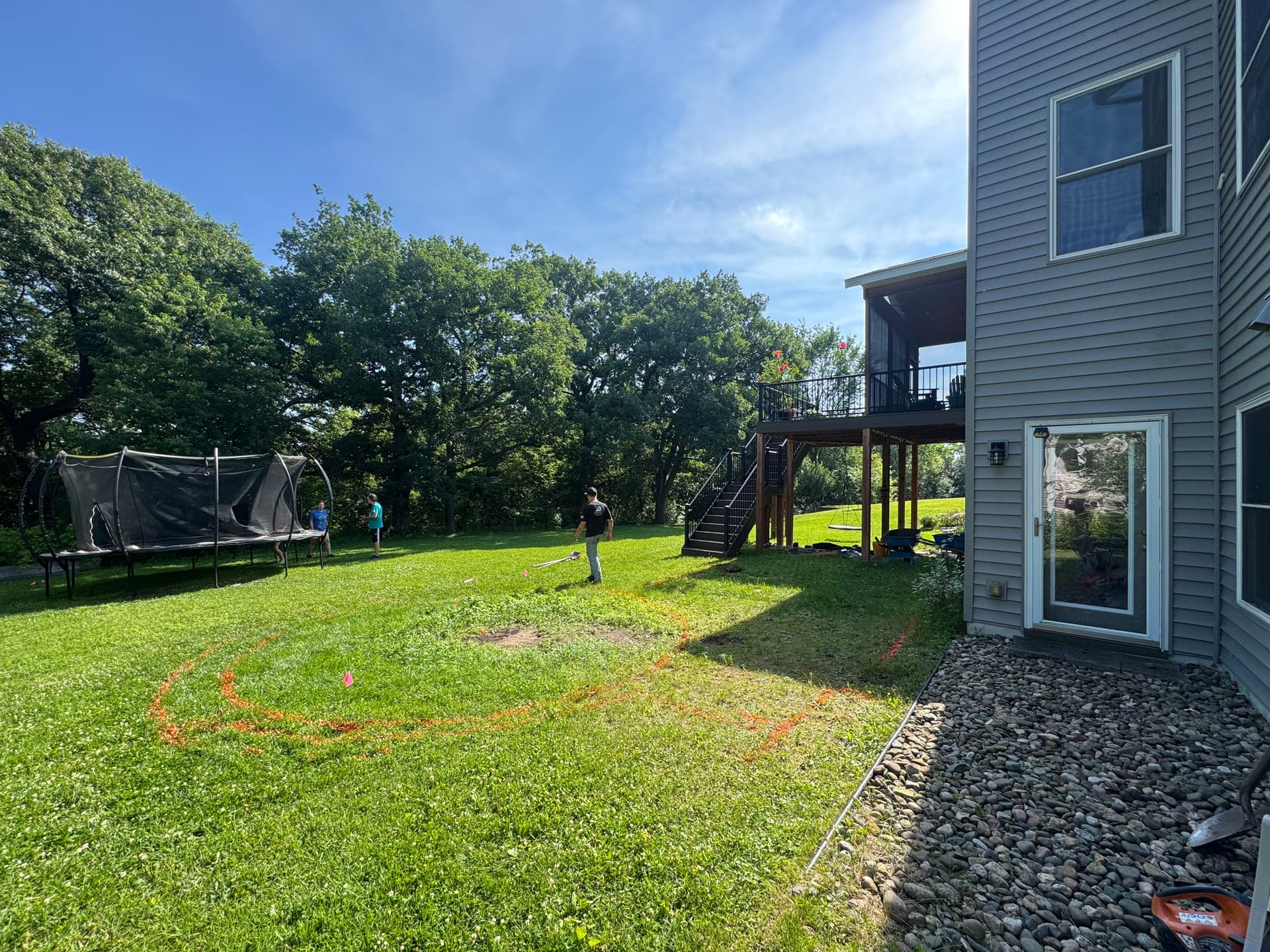
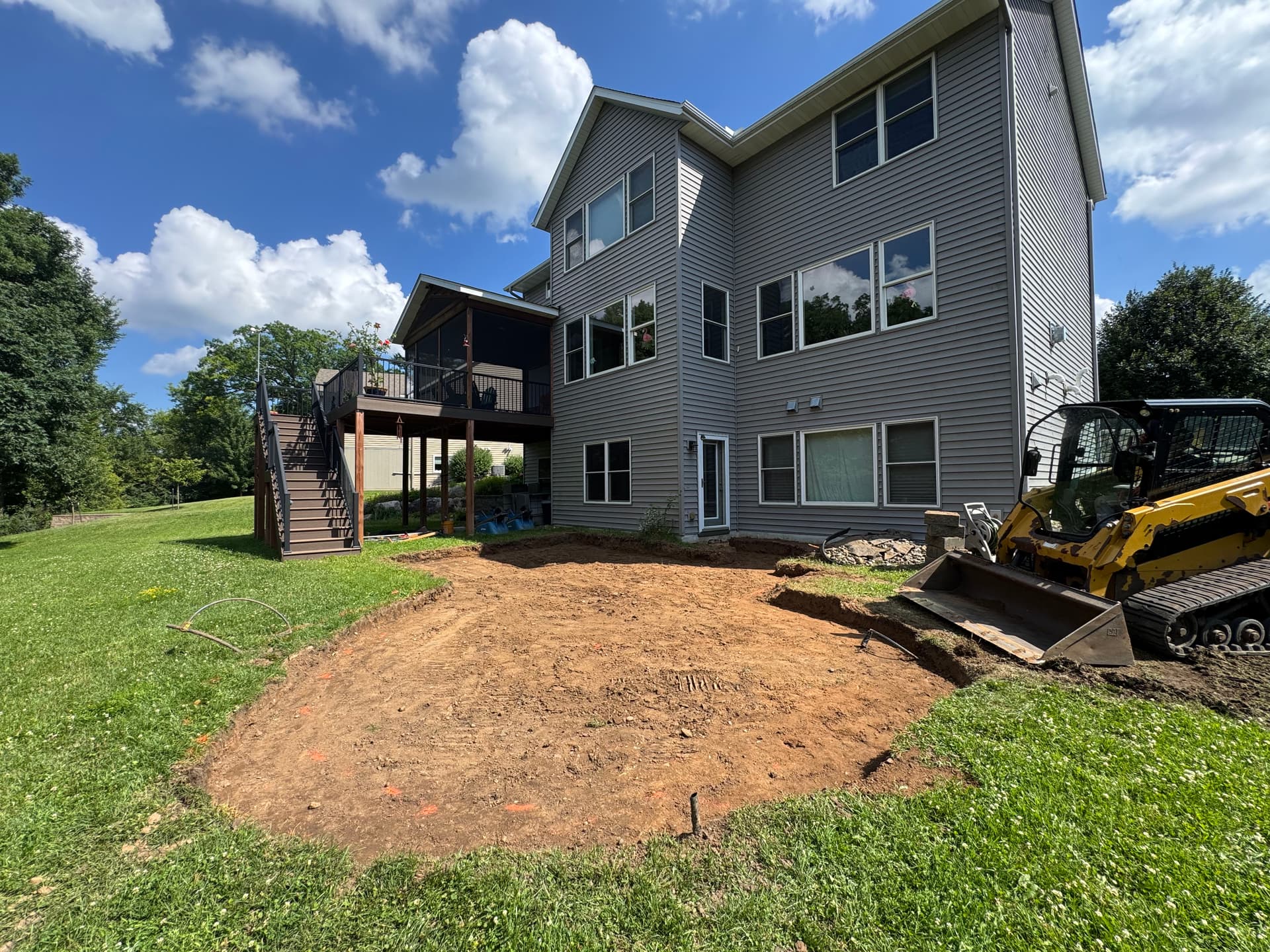
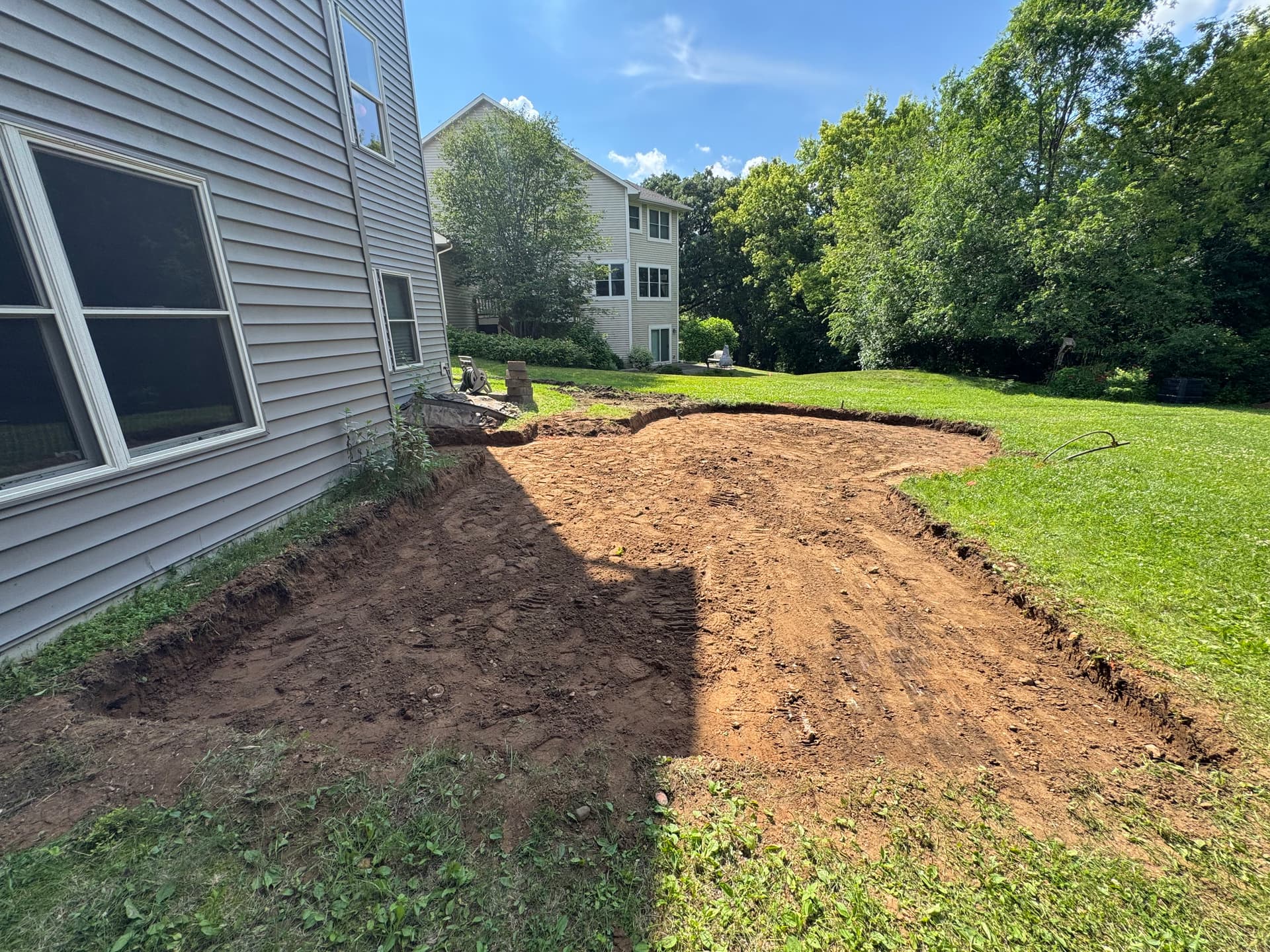
Every great paver patio starts the same way - with dirt work. Before a single paver gets set, the ground has to be properly excavated and shaped. Skip that step, or rush through it, and you end up with a patio that shifts, cracks, and settles unevenly within a few years. We've seen it plenty of times on jobs where someone cut corners on the prep.
Here's what we were working with on this Cottage Grove backyard. The layout was marked out, the sod was stripped, and the skid steer got to work clearing and leveling the area down to the right depth. The shape of the excavation follows the planned patio footprint - and you can already get a sense of how much usable outdoor space this homeowner is going to end up with.
The excavation phase is where our dirt work and paver patio skills really overlap. Getting the depth consistent, the edges clean, and the grade correct from the start is what sets up a solid base. That base - compacted gravel and sand - is what actually carries the weight of the pavers and keeps everything in place through freeze-thaw cycles year after year.
A lot of homeowners don't think much about this part of the process. They want to see the finished product, which makes total sense. But the work happening underground is what determines whether that finished patio looks just as good five or ten years from now as it does on day one. Getting this stage right is non-negotiable for us.
If you've been thinking about adding a paver patio to your backyard, now is a smart time to get on the schedule. Fall tends to sneak up fast, and projects like this take time to plan and execute the right way. The sooner we can get eyes on your space, the better positioned you'll be to have it done before the season ends.